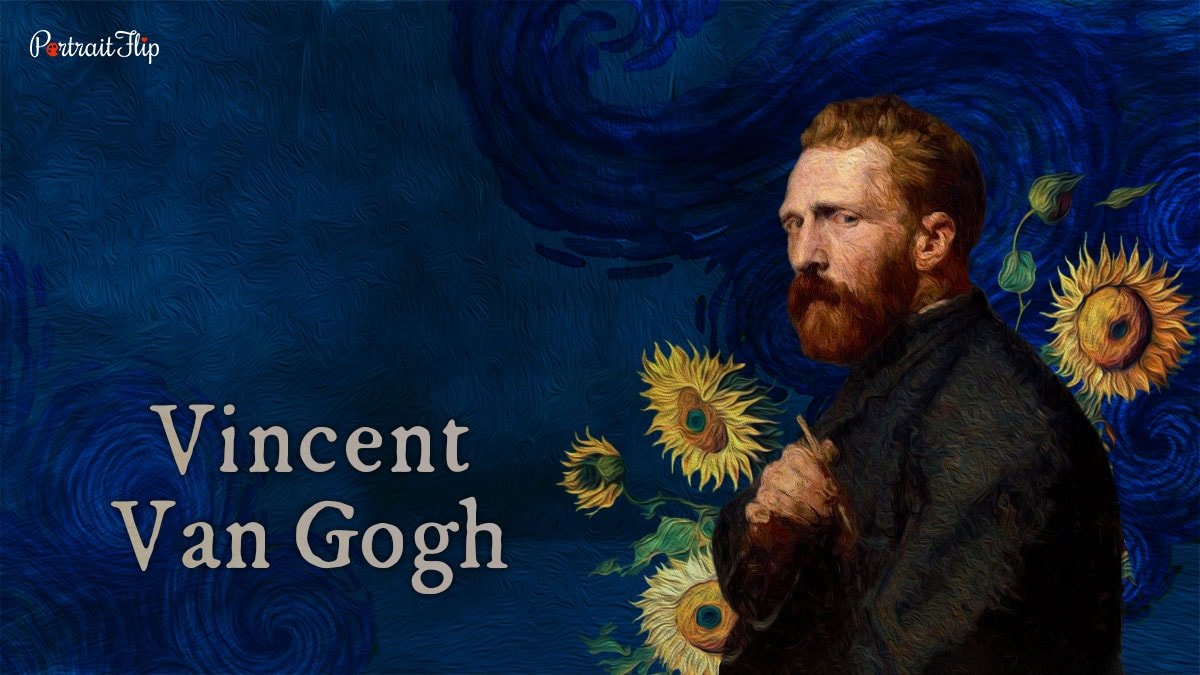
When people think of great artists, few names evoke as much emotion as Vincent van Gogh. His paintings are instantly recognizable—bold, expressive, and filled with movement—but his life tells an even deeper story. It is a story of struggle, loneliness, relentless passion, and a burning desire to express what words could not.
Today, Van Gogh is celebrated as one of the most influential artists in history. Yet, during his lifetime, he was largely unknown, misunderstood, and financially unstable. His journey reminds us that art is not always about recognition—it is often about expression, survival, and meaning.
Early Life: A Search for Purpose
Vincent van Gogh was born on March 30, 1853, in the Netherlands. His early life was not particularly artistic. In fact, he spent years trying to find his purpose. He worked as an art dealer, a teacher, and even attempted to become a preacher.
But nothing seemed to fit.
Van Gogh was deeply emotional and introspective. He struggled with mental health and often felt disconnected from the world around him. It wasn’t until his late twenties that he discovered painting—not as a hobby, but as a necessity.
Art became his language.
The Beginning of His Artistic Journey
Van Gogh started painting seriously around the age of 27, which is considered quite late for an artist. His early works were dark, heavy, and grounded in realism. They reflected the harsh lives of working-class people.
One of his most famous early paintings, The Potato Eaters, perfectly captures this phase. The painting portrays a poor family sitting around a table, eating potatoes under dim light. The tones are earthy and somber, emphasizing the reality of their lives.
Van Gogh didn’t want to create “beautiful” art at this stage—he wanted to create honest art.
Paris: A Shift in Style and Perspective
In 1886, Van Gogh moved to Paris, where everything changed.
He was exposed to new artistic styles, especially Impressionism. Artists around him were experimenting with light, color, and brushstrokes. This influenced him deeply.
His palette became brighter. His strokes became more expressive. He started painting not just what he saw, but what he felt.
Paris marked the transition of Van Gogh from a realist painter to a pioneer of what would later be called Post-Impressionism.
Arles: The Most Creative Period
Van Gogh later moved to Arles, a small town in the south of France. This period is often considered the most productive and defining phase of his life.
Here, he created some of his most iconic works, including:
- Sunflowers
- The Bedroom
- Starry Night
His paintings during this time were vibrant, energetic, and full of emotion. The colors were intense—yellows, blues, and greens seemed to come alive on the canvas.
But Arles was also where his mental health began to deteriorate more visibly.
The Struggle Within
Van Gogh’s life was marked by emotional instability. He experienced episodes of anxiety, depression, and possibly other mental health conditions that were not well understood at the time.
One of the most talked-about incidents in his life is when he cut off a part of his own ear after a conflict with fellow artist Paul Gauguin.
This event symbolizes the intensity of his inner turmoil.
Despite his struggles, Van Gogh continued to paint. In fact, some of his most powerful works were created during his periods of emotional distress.
For him, painting was not just art—it was therapy.
The Meaning Behind His Art
What makes Van Gogh’s work so special is not just the technique, but the emotion behind it.
Take Starry Night, for example. At first glance, it looks like a beautiful night sky. But when you look closer, the swirling patterns, the exaggerated stars, and the intense movement reveal something deeper.
It feels restless. Alive. Almost turbulent.
This painting was created while Van Gogh was in an asylum. The sky, in many ways, reflects his inner state—chaotic yet mesmerizing.
Similarly, his Sunflowers are often seen as symbols of hope and warmth. The bright yellow tones convey energy and life, but they also hint at his longing for happiness and stability.
Van Gogh didn’t paint reality—he painted emotion.
His Relationship with His Brother Theo
Throughout his life, Van Gogh had one constant support system: his brother, Theo van Gogh.
Theo financially supported him and believed in his talent when no one else did. Their letters to each other provide deep insight into Van Gogh’s thoughts, struggles, and artistic vision.
Without Theo, Van Gogh might not have been able to continue painting.
Their bond is one of the most touching aspects of his story.
The Final Years
In the last years of his life, Van Gogh admitted himself to a mental asylum in Saint-Rémy. Even there, he continued to create art. His productivity was astonishing. In just a few years, he created over 2,000 artworks, including around 860 oil paintings.
However, his mental health did not improve.
In 1890, at the age of 37, Vincent van Gogh died from a gunshot wound, widely believed to be self-inflicted. It was a tragic end to a life filled with passion and pain.
Recognition After Death
Ironically, Van Gogh’s fame came after his death.
Today, his paintings are among the most valuable in the world. His work has influenced countless artists and continues to inspire millions. Museums, exhibitions, and art lovers celebrate his legacy globally.
He went from being unknown to becoming a symbol of artistic genius.
Why Van Gogh Still Matters Today
Van Gogh’s story resonates because it is deeply human.
He teaches us that:
- You don’t need to start early to create something meaningful
- Struggles can coexist with creativity
- Art is not about perfection, but expression
- Recognition doesn’t define your worth
In a world that often values quick success, Van Gogh’s journey reminds us to stay true to our passion—even when the world doesn’t understand it.
Final Thoughts
The life of Vincent van Gogh is not just a story about art—it is a story about resilience, emotion, and the need to express oneself.
His paintings are not just visuals; they are experiences. They allow us to feel what he felt, see what he saw, and connect with something deeper within ourselves.
Perhaps that is why his work continues to live on.
Because in every brushstroke, there is a piece of his soul—and in understanding his art, we often end up understanding a part of ourselves too.