In a world where art is often reduced to aesthetics—something that simply “looks good”—Indian art stands apart. It doesn’t just decorate spaces; it carries stories, traditions, beliefs, and emotions passed down through generations.
From the intricate patterns of Madhubani art to the symbolic storytelling of Warli art and the narrative richness of Kalamkari, Indian art forms are deeply rooted in culture. They are not just styles—they are living traditions that continue to evolve while staying connected to their origins.
Table of Contents
ToggleWhy Indian Art Forms Still Matter Today
Traditional Indian art was never created just for display. It was part of everyday life—painted on walls during festivals, drawn on floors for rituals, and woven into fabrics used in daily living. Art was not separate from life; it was an extension of it.
What makes these art forms stand out is their depth. They are not just visually appealing but also symbolic and narrative-driven. Every pattern, every color, and every motif carries meaning. This layered nature gives Indian art a sense of permanence—it doesn’t fade with trends because it is rooted in culture and belief systems.
Madhubani art: Where Every Detail Has Meaning
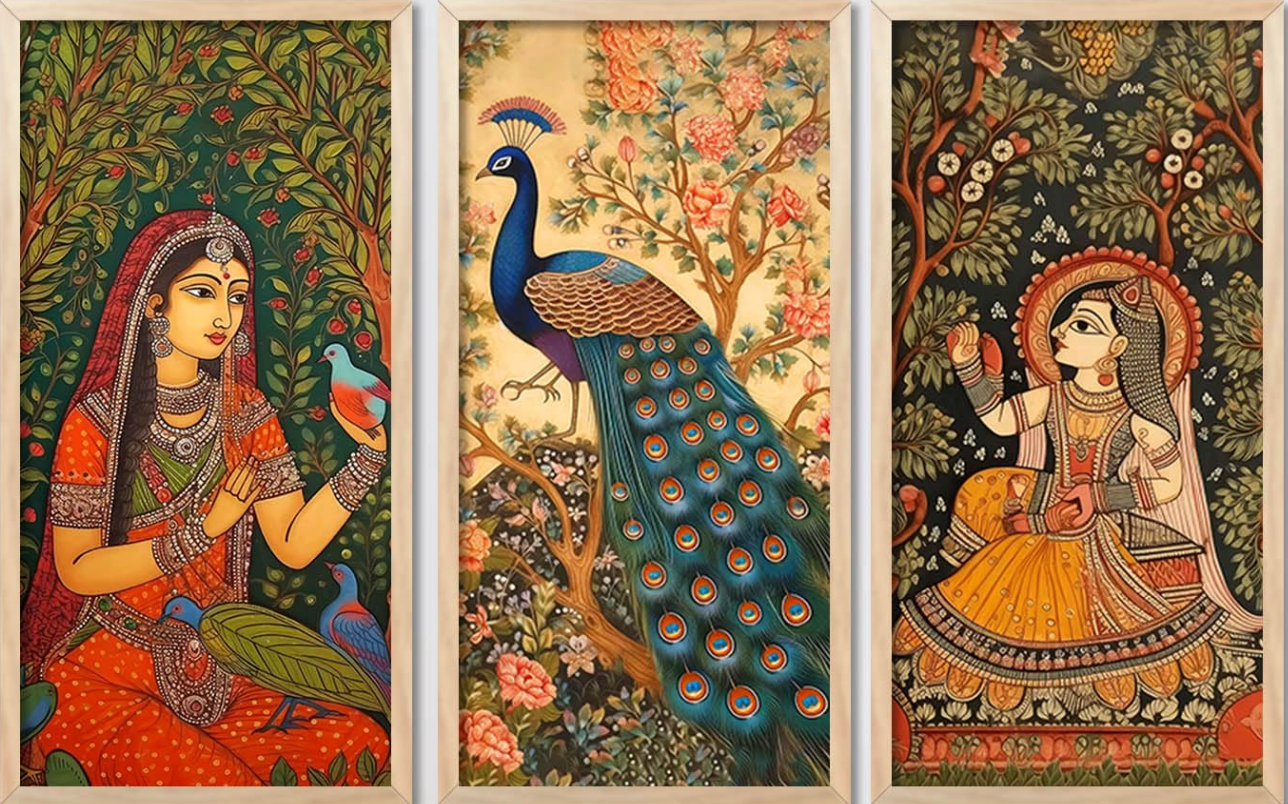
Madhubani art, originating from the Mithila region of Bihar, is one of the most recognizable Indian art forms. Traditionally practiced by women, it was used to decorate homes during important occasions like weddings and festivals.
What makes Madhubani visually striking is its intricate detailing. There is rarely any empty space; every inch of the surface is filled with patterns, lines, and vibrant colors. This is not just a stylistic choice—it reflects a mindset where completeness and abundance are valued.
Beyond its visual appeal, Madhubani art is deeply symbolic. Common elements like fish, peacocks, and the sun are not random decorations. They represent prosperity, love, energy, and spirituality. Many artworks also depict scenes from mythology, turning each painting into a narrative piece.
Even today, Madhubani art continues to thrive because it offers more than beauty—it offers meaning.
Warli art: Simplicity That Tells Stories
In contrast to the detailed nature of Madhubani, Warli art embraces simplicity. Originating from the Warli tribe of Maharashtra, this art form uses basic geometric shapes to create entire scenes.
At first glance, Warli paintings may seem minimal. But the simplicity is intentional and powerful. Human figures are represented using triangles and circles, yet they convey movement, emotion, and interaction with surprising clarity.
Warli art focuses on everyday life—farming, dancing, hunting, and celebrations. It captures the rhythm of community living and the connection between humans and nature. One of its most iconic motifs is the circular dance, symbolizing unity and the cyclical nature of life.
What makes Warli art special is its ability to communicate complex ideas through the simplest forms. It proves that storytelling doesn’t need complexity to be impactful.
Kalamkari: Stories Painted on Fabric
Kalamkari takes storytelling to another level—by turning fabric into a canvas. Practiced in parts of Andhra Pradesh and Telangana, this art form involves hand-painting or block-printing intricate designs using natural dyes.
The process itself is a testament to patience and craftsmanship. From preparing the fabric to sketching detailed designs and applying colors layer by layer, creating a Kalamkari piece can take days or even weeks.
What sets Kalamkari apart is its narrative depth. Many pieces depict scenes from epics, mythology, and religious texts. These are not just decorative elements; they are visual stories meant to be experienced.
Because of its strong connection to spirituality and storytelling, Kalamkari holds both artistic and cultural significance. It is not just something to wear or display—it is something to connect with.
The Power of Storytelling in Indian Art
Across these diverse art forms, one element remains constant: storytelling.
Indian art doesn’t rely on realism to communicate ideas. Instead, it uses symbols, patterns, and composition to convey meaning. This makes it more interpretative and engaging.
A single painting can represent a story, a belief, or an emotion without explicitly stating it. This layered storytelling allows viewers to connect with the artwork in their own way, making the experience more personal.
Indian Art vs Modern Minimalism
Modern minimalism has gained popularity for its clean and uncluttered aesthetic. It focuses on simplicity, open space, and visual balance. While it has its own appeal, it operates very differently from traditional Indian art.
Indian art tends to fill space rather than leave it empty. It values detail, symbolism, and narrative depth. Where minimalism often prioritizes how something looks, Indian art emphasizes what something means.
Another key difference lies in perspective. Minimalist art often reflects individual expression, while Indian art reflects collective culture and shared traditions. It is less about the artist alone and more about the community and its stories.
This is why Indian art often feels richer—it carries layers of meaning that go beyond visual appeal.
Why Indian Art Feels More Meaningful
Indian art resonates deeply because it connects multiple aspects of life—culture, spirituality, nature, and human experience. It doesn’t exist in isolation.
When you look at a traditional artwork, you are not just observing a design. You are engaging with a story, a belief system, and a way of life. This depth creates a stronger emotional connection.
It also explains why these art forms continue to stay relevant. They are not tied to trends; they are rooted in identity.
The Modern Relevance of Traditional Art
In today’s fast-paced and digital world, there is a growing appreciation for authenticity. People are moving beyond surface-level aesthetics and looking for deeper meaning in what they consume.
Indian art forms fit perfectly into this shift. They are being incorporated into fashion, home décor, branding, and even digital content. At the same time, they provide a platform for artisans to sustain their craft and keep traditions alive.
This revival is not just about nostalgia—it’s about rediscovering value.
Preserving a Cultural Legacy
Despite their growing popularity, traditional Indian art forms face challenges. Commercialization sometimes strips them of their original meaning, and younger generations may move away from practicing them.
Preserving these art forms requires more than appreciation. It requires understanding. When people recognize the stories and effort behind these artworks, they are more likely to value and support them.
Final Thoughts
Indian art forms are more than visual expressions—they are cultural narratives that have stood the test of time.
From the detailed storytelling of Madhubani art to the symbolic simplicity of Warli art and the narrative richness of Kalamkari, each form offers a unique perspective on life.
They remind us that art is not just about how something looks. It’s about what it represents, what it preserves, and how it connects us to something larger than ourselves.
So the next time you come across traditional Indian art, don’t just admire it.
Take a moment to understand it.
Because behind every line and pattern, there is a story waiting to be discovered.